
Trust Registration vs Society Registration: Which is Better for Your NGO in India?
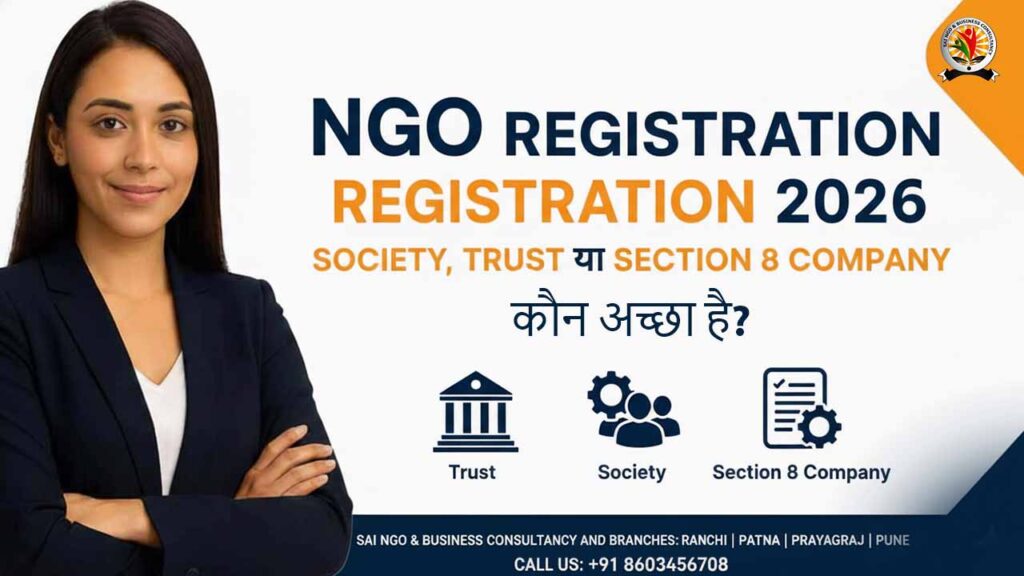
When starting a non-governmental organization in India, one of the first and most important decisions is choosing the right legal structure. Many founders struggle to decide between Trust Registration vs Society Registration. Both structures are widely used for NGOs in India and allow organizations to work in areas like education, healthcare, social welfare, environment protection, and rural development. However, the legal framework, management structure, compliance requirements, and registration process differ between the two. Understanding the difference between Trust Registration and Society Registration is essential before starting an NGO because the structure you choose will affect governance, credibility, funding opportunities, and legal compliance. In this detailed guide, we will explain everything you need to know about Trust Registration vs Society Registration in India, including benefits, eligibility, documents, registration process, cost, timeline, and expert tips to help you choose the best option for your NGO. What is Trust Registration in India? A Trust is a legal arrangement where a person (called the Settlor) transfers property or assets to trustees who manage them for the benefit of the public or a specific group. Trusts in India are governed by the Indian Trusts Act, 1882 (for private trusts) and state laws for public charitable trusts. Trusts are commonly formed for: Key Characteristics of a Trust Example Activities of Trust NGOs Trusts are especially common in religious and family-controlled charitable institutions. What is Society Registration in India? A Society is an association of individuals who come together for charitable, literary, scientific, or social purposes. Societies are governed by the Societies Registration Act, 1860. A society must have at least 7 members to register. Common Purposes of Societies Societies are democratic organizations where decisions are taken collectively by the governing body or managing committee. Key Features of Society NGOs Societies are widely used for community-based NGOs and development organizations. Trust Registration vs Society Registration: Key Differences Below is a comparison to help you clearly understand Trust Registration vs Society Registration. Feature Trust Society Governing Law Indian Trust Act / State Trust Acts Societies Registration Act, 1860 Minimum Members 2–3 Trustees Minimum 7 Members Management Trustees Governing Body / Managing Committee Regulation Less regulated More regulated Transparency Moderate High Decision Making Trustees control decisions Democratic voting system Compliance Minimal compliance Annual filings required Why Choosing Between Trust Registration vs Society Registration is Important Choosing between Trust Registration vs Society Registration is a critical decision when starting an NGO in India. The legal structure you select will influence how your organization operates, how decisions are made, and how easily you can receive funding or government support. Selecting the right structure from the beginning helps avoid legal complications and ensures smooth functioning of the organization in the long run. Below are some key reasons why understanding the difference between Trust Registration and Society Registration is important. ✔ Governance Structure Trusts are managed by trustees who make most of the decisions, while societies operate through a democratic system where members or a governing body participate in decision-making. Choosing the right structure determines how your NGO will be governed. ✔ Funding Opportunities Many government schemes, CSR initiatives, and funding agencies prefer working with organizations that have a transparent structure. Societies and Section 8 companies often receive more preference for large-scale funding programs. ✔ Compliance Requirements Trusts generally have fewer compliance requirements, while societies require regular filings, meetings, and documentation. Understanding these obligations helps you choose a structure that suits your management capacity. ✔ Transparency and Credibility Societies are considered more transparent due to regulatory oversight and member participation. This can increase credibility among donors, government authorities, and the public. ✔ Long-Term Growth and Expansion If your NGO plans to expand operations, involve multiple stakeholders, or work at a national level, selecting the appropriate legal structure becomes essential for long-term sustainability. Benefits of Trust Registration ✔ Simple Registration Process Trust registration is generally easier and faster compared to society registration. ✔ Less Compliance Trusts have fewer regulatory requirements and reporting obligations. ✔ Long-Term Stability Trusts can function for many years without frequent regulatory intervention. ✔ Founder Control Trustees typically retain decision-making authority. ✔ Suitable for Religious & Charitable Institutions Many temples, hospitals, and charitable institutions operate as trusts. Benefits of Society Registration ✔ Democratic Governance Societies operate through elected governing bodies. ✔ Higher Transparency Societies require proper documentation and reporting. ✔ Suitable for Community NGOs Societies encourage member participation. ✔ Better Credibility Societies are often trusted more by government agencies and donors. ✔ Preferred for CSR Funding Many CSR programs prefer working with registered societies. Eligibility Criteria for Trust Registration vs Society Registration Before starting an NGO, it is important to understand the eligibility criteria for Trust Registration vs Society Registration in India. Each structure has specific requirements regarding the number of members, objectives, and governance framework. Meeting these eligibility conditions ensures that your NGO registration process is smooth and legally compliant. Eligibility Criteria for Trust Registration ✔ Minimum Number of Trustees A trust generally requires at least 2 to 3 trustees. However, the exact requirement may vary depending on the state laws where the trust is registered. ✔ Settlor (Founder) The person who creates the trust is called the Settlor. The settlor transfers property, funds, or assets to trustees to manage for charitable purposes. ✔ Charitable Objective The trust must be created for a lawful charitable purpose such as education, healthcare, poverty relief, environmental protection, or social welfare. ✔ Trust Deed A properly drafted Trust Deed is required. This legal document outlines the objectives, rules, powers of trustees, and management structure of the trust. ✔ Registered Office Address The trust must have a registered office address along with a No Objection Certificate (NOC) from the property owner if the premises are rented. Eligibility Criteria for Society Registration ✔ Minimum Seven Members At least seven members are required to register a society under the Societies Registration Act, 1860. These members form the governing body of the organization. ✔ Non-Profit Objective The society must be established for non-profit and charitable purposes such