
SAI NGO & BUSINESS CONSULTANCY
Expert services for NGO, Trust, Society Registration & Compliance across India.
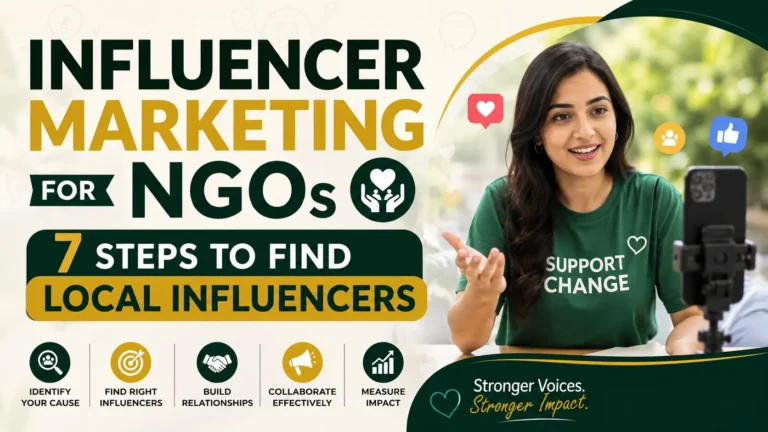
Influencer marketing for NGOs is the practice of teaming up with trusted social media voices, usually people with smaller but highly engaged local audiences, to spread awareness about a cause, drive donations, or recruit volunteers. Unlike brand influencer marketing, it works best when it is built on shared values rather than paid promotion alone.
Most nonprofits still think influencer marketing is something only big brands can afford. That is not true anymore.
Today, some of the most effective NGO campaigns are run by regular people with a few thousand followers and a genuine connection to their community.
A local food blogger. A neighbourhood mom who volunteers on weekends. A college student who cares deeply about clean water. These are the voices people actually trust.
In this guide, we will walk through what influencer marketing for NGOs really means, why local influencers often beat big-name celebrities, and how to build partnerships that feel honest instead of forced.
What Is Influencer Marketing for NGOs?
Influencer marketing for NGOs means working with content creators, community leaders, or everyday people who have an engaged following, to help spread your message. Instead of running a traditional ad, your cause gets shared by someone the audience already trusts.
This can look like:
- A local influencer posting about your fundraiser
- A short video explaining why your NGO’s work matters
- A story series showing a day at your shelter, school, or relief camp
- A joint Instagram Live or Q&A session with your team
Why Local Influencers Matter More Than Celebrities
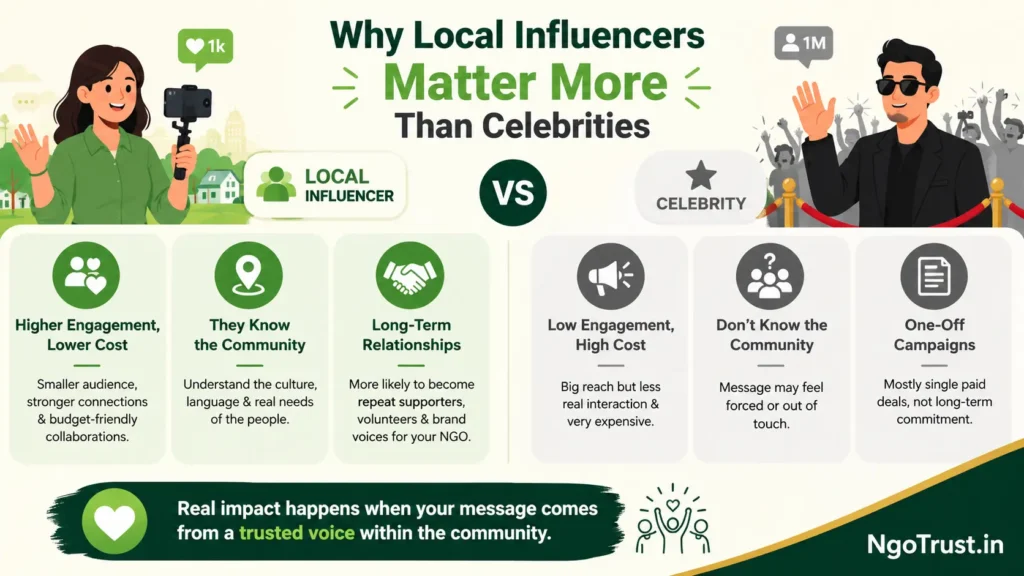
A celebrity shoutout might get you a spike in likes. A local influencer gets you something more valuable: real, lasting trust within a specific community.
Higher Engagement, Lower Cost
Local and micro-influencers usually have smaller audiences, but their followers pay closer attention. Comment sections feel like real conversations, not just noise. Many local creators are also open to free or low-cost collaborations, especially when they care about the cause.
They Know the Community
A local influencer already understands the culture, language, and needs of the people your NGO serves. Their content feels native instead of like an outside campaign dropped into a feed.
Long-Term Relationships, Not One-Off Posts
Celebrities often work on single paid deals. Local influencers, especially ones who share your values, are more likely to become repeat volunteers, donors, or long-term brand voices for your NGO.
How to Find the Right Local Influencers for Your NGO
Finding the right influencer is not about chasing the biggest follower count. It is about finding people whose audience actually overlaps with the community you serve.
Look Beyond Follower Count
An influencer with 5,000 followers and a 6% engagement rate is often far more useful than one with 100,000 followers and almost no comments. Focus on:
- Engagement rate (likes and comments compared to followers)
- Audience location and age group
- How often they post about causes, community events, or volunteering
Check Their Values and Past Content
Scroll through at least 20 to 30 of their past posts before reaching out. Ask yourself: Does their tone match your NGO’s mission? Have they supported similar causes before? Would your donors feel comfortable seeing your name next to theirs?
Use the Right Tools
How to Approach and Pitch Local Influencers
The pitch matters as much as the influencer you pick. Nonprofits often make the mistake of sending a generic, copy-pasted message. That rarely gets a reply.
Instead, try this simple approach:
- Personalize the message. Mention a specific post of theirs that connected with your mission.
- Explain the impact, not just the ask. Show them what their support would actually change.
- Be upfront about compensation, whether that is payment, free event access, public recognition, or simply the visibility of supporting a good cause.
- Keep the first message short. Save the full details for a call or follow-up email.
Most local influencers say yes when they feel respected as a partner, not used as a free marketing channel.
Types of Influencer Collaborations That Work for NGOs
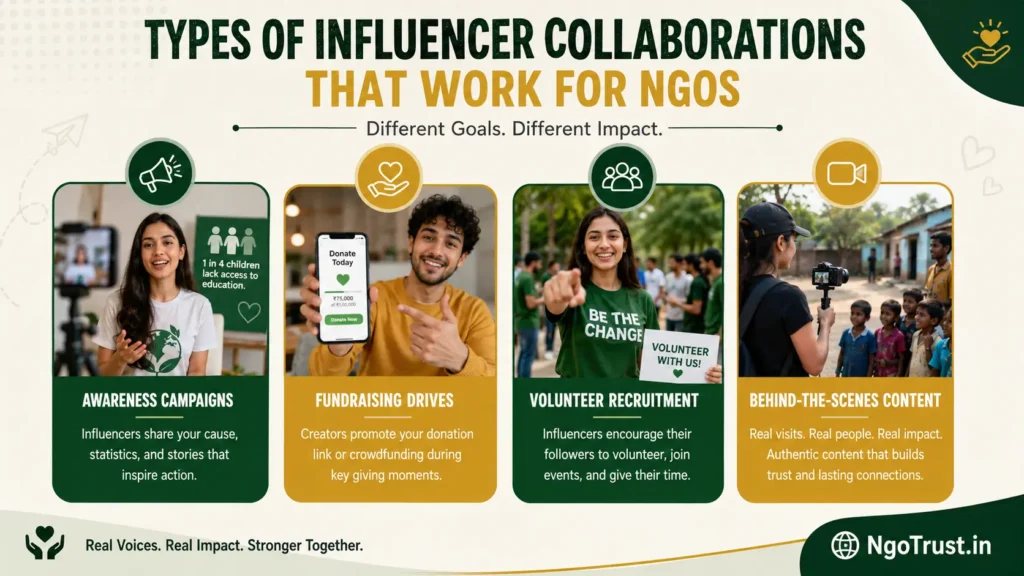
There is no single right way to collaborate. The best format depends on your goal and your budget.
Awareness Campaigns
Influencers create posts or reels explaining your cause, sharing statistics, or telling a personal story connected to your mission.
Fundraising Drives
Creators promote a specific donation link or crowdfunding page, often during a matching-gift period or a giving day.
Volunteer Recruitment
Local influencers who genuinely care about your work can encourage their followers to sign up, attend events, or donate their time.
Behind-the-Scenes Content
Inviting an influencer to visit your project site and document the day builds authentic, unscripted content that traditional ads simply cannot match.
How to Measure the Success of Your Influencer Campaign
Followers and likes look nice, but they do not always tell you if the campaign worked. Track metrics that connect directly to your NGO’s goals:
- Donations or sign-ups generated through a unique link or promo code
- Website traffic from the influencer’s post
- New volunteer applications during the campaign window
- Engagement quality, such as shares and saves, not just likes
- Growth in your own social following after the collaboration
Ask each influencer to share their post insights with you. Most are happy to, especially if you plan to work together again.
Common Mistakes NGOs Make with Influencer Marketing
- Choosing influencers based only on follower count, not community fit
- Sending a generic pitch with no personal connection to the cause
- Skipping a written agreement about content, timing, and compensation
- Treating the influencer as a one-time favour instead of a real partner
- Never following up after the campaign ends
Avoiding these mistakes alone can put your NGO ahead of most organizations still figuring this out.
Where to Go From Here
Influencer marketing for NGOs is not about chasing trends. It is about finding the right voices in the right communities and building relationships that last beyond a single campaign.
If your team is short on time or unsure where to start, working with people who do this daily can save months of trial and error. A short conversation with a marketing partner who understands the nonprofit space can help you shortlist the right local influencers, set realistic goals, and avoid the common missteps most NGOs run into early on.
If that sounds useful, feel free to reach out and book a quick consultation. There is no pressure, just a conversation about what might work for your cause.
Frequently Asked Questions
What is influencer marketing for NGOs?
Influencer marketing for NGOs is the practice of partnering with social media creators, usually local or community-based ones, to raise awareness, drive donations, or recruit volunteers for a cause.
How do NGOs find local influencers?
NGOs can find local influencers by searching relevant hashtags, checking who already posts about community causes, and reviewing engagement rates rather than just follower counts.
Do NGOs need to pay influencers?
Not always. Many local influencers collaborate for free or in exchange for event access, public recognition, or the personal satisfaction of supporting a cause they believe in. Larger campaigns may involve paid partnerships.
Are micro-influencers better than celebrities for nonprofit campaigns?
For most NGOs, yes. Micro and local influencers usually have higher engagement, lower cost, and stronger trust within a specific community, which matters more for causes than sheer reach.
How long should an NGO influencer campaign run?
Most campaigns run for two to six weeks, though ongoing ambassador-style partnerships can last for months or even years if both sides find value in the relationship.
Useful Links
- Edelman Trust Barometer
- HubSpot: Influencer Marketing Guide
- Classy Nonprofit Blog
- Later: Influencer Marketing Hub