
SAI NGO & BUSINESS CONSULTANCY
Expert services for NGO, Trust, Society Registration & Compliance across India.
An NGO for education is a non-profit organization that works to provide quality education to children and young people who lack access to it, especially in rural, low-income, or marginalized communities. These organizations run schools, train teachers, distribute learning materials, and push for policy changes that protect every child’s right to learn.
Every child deserves a chance to learn. But in India, millions of children still grow up without access to a proper school, a trained teacher, or even the basic tools needed to study.
That gap is exactly where an NGO for education steps in.
Whether you are a parent, a donor, a volunteer, or someone who just wants to understand the landscape, this guide walks you through everything you need to know about education NGOs in India, including who they are, what they actually do on the ground, and which organizations are worth paying attention to.
What Is an NGO for Education?
An NGO (Non-Governmental Organization) for education is an independent, non-profit group that works to improve access to quality education. These organizations operate outside of government systems, though many work closely with state and central governments.
Their work can look very different depending on where they operate and who they serve. Some run learning centers in slums. Some train government school teachers. Some focus on getting girls back into school after they drop out. Some provide mid-day meals so children have a reason to show up.
What ties them together is a shared belief: that education is a right, not a privilege.
Why Do Education NGOs Exist?
India has made real progress in school enrollment over the past two decades. But enrollment alone does not equal education. Many children attend school without actually learning to read or do basic arithmetic.
Here are some of the core problems education NGOs try to solve:
- High dropout rates, especially among girls and children from lower-income families
- Poor learning outcomes even among enrolled students
- Lack of trained teachers in rural areas
- No access to schools for children in remote regions
- Child labor that pulls children out of classrooms
- Barriers tied to caste, gender, and disability
Education NGOs work on these specific problems with targeted programs, community involvement, and long-term commitment.
Who Needs the Help of an NGO for Education?
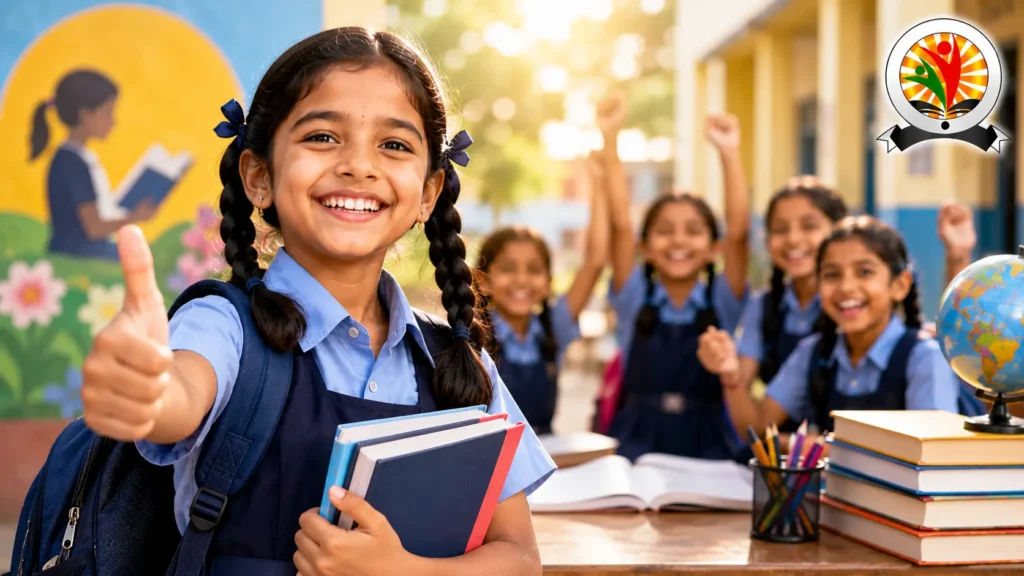
The children most likely to benefit from education NGOs include:
- Children in rural and tribal areas where schools are far or poorly staffed
- Girls in communities where education for women is not prioritized
- Children from daily-wage families who need to work instead of study
- Orphaned or abandoned children with no family support
- Children with disabilities who need special learning support
- First-generation learners whose parents never attended school
Education NGOs meet these children where they are, often building trust with families before any learning can begin.
Top 10 NGOs for Education in India You Should Know
Here is a look at ten well-known and trusted education NGOs operating in India. Each has a different approach, but all share a commitment to getting more children into quality learning environments.
1. Pratham Education Foundation
Pratham is one of the largest NGOs for education in India. It is known for its ASER (Annual Status of Education Report), a nationwide survey that tracks whether children can actually read and do basic math. Pratham’s direct learning programs operate across 21 states.
- Phone: +91 22 2281 9561
- Website: www.pratham.org
- Address: 29 B, SG Barve Marg, Kamgaar Nagar, Kurla, Mumbai, Maharashtra 400024
2. Teach For India
Teach For India places talented graduates and professionals as full-time teachers in low-income schools for two years. The goal is not just better classroom outcomes, but building a pipeline of leaders committed to educational equity.
- Phone: +91 86570 12848
- Website: www.teachforindia.org
- Address: Plot No. 7, Road No. 12, Banjara Hills, Hyderabad, Telangana 500034
3. Smile Foundation
Smile Foundation runs education programs specifically for children from urban slums, rural areas, and tribal regions. Their flagship program Mission Education reaches over 500,000 children with non-formal and supplemental learning support.
- Phone: +91 11 43123700
- Website: www.smilefoundationindia.org
- Address: V-11 Level 1, Green Park Extension, New Delhi 110016
4. Akshaya Patra Foundation
Akshaya Patra takes a practical approach to education: feed the children, and they will come to school. This NGO runs one of the world’s largest school meal programs, providing hot, nutritious lunches to over 2 million children in government schools every day.
- Phone: +91 80 3014 3400
- Website: www.akshayapatra.org
- Address: 72, 3rd Floor, 3rd Main Road, Yeshwanthpur Industrial Suburb, Bengaluru 560022
5. CRY – Child Rights and You
CRY works at the intersection of child rights and education. Rather than running schools directly, CRY supports grassroots organizations, advocates for policy change, and helps communities demand better schools from the government.
- Phone: +91 91159 11500
- Website: www.cry.org
- Address: 189/A Anand Estate, Sane Guruji Marg, Mumbai, Maharashtra 400011
6. Bal Raksha Bharat (Save the Children India)
Bal Raksha Bharat is the Indian arm of Save the Children. They focus on children in the most vulnerable situations, including those affected by poverty, disasters, and conflict. Their education programs focus on getting out-of-school children enrolled and keeping them there.
- Phone: +91 9870127127
- Website: www.balrakshabharat.org
- Address: D-61, East of Kailash, New Delhi 110065
7. Mera India Mera Adhikar (MIMANGO)
MIMANGO works with a rights-based approach to education, focusing on children and communities that are often overlooked in mainstream development programs. Their work centers on awareness, mobilization, and making sure children know their entitlements under Indian law.
- Phone: +91 97166 11524
- Website: www.mimango.org
- Address: S 285 Kanak Durga Colony, Sector 12, Rama Krishna Puram, New Delhi 110022
8. KHUSHII
KHUSHII stands for Kinship for Humanitarian, Social and Holistic Interventions in India. The organization runs education programs alongside healthcare and livelihood support, recognizing that a child’s ability to learn is tied to their overall wellbeing.
- Phone: 011-41410075/76
- Website: www.khushii.org
- Address: New Delhi, India
9. i-Saksham Education and Learning Foundation
i-Saksham works in Bihar and Jharkhand, two states with some of India’s most significant education challenges. They focus on training young local women as community educators, giving them both a livelihood and a role in transforming their villages.
- Phone: +91 90667 45415
- Website: www.i-saksham.org
- Address: Jawahar Nagar Colony, Kanhauli, Muzaffarpur, Bihar 842002
10. TRY NGO – Transforming Rural Youth
TRY NGO focuses on rural youth who have fallen through the cracks of the formal education system. They provide vocational training, digital literacy, and life skills, helping young people build a future even if they missed out on traditional schooling.
- Phone: +91 81711 17111
- Website: www.tryngo.org
- Address: B 292, Ground Floor, New Ashok Nagar, New Delhi 110096
How Do NGOs for Education Actually Work?
Education NGOs use a wide range of strategies depending on their context. Here are the most common approaches:
Community Learning Centers
Many NGOs set up informal learning spaces in villages or urban slums where children can get extra support outside of school hours. These are especially helpful for first-generation learners whose parents cannot help them with homework.
Many learning centers also organize creative activities like handmade cards, drawing, and craft workshops to improve children’s creativity and communication skills.
Teacher Training Programs
A school is only as good as its teachers. Several education NGOs focus on training and supporting government school teachers with better pedagogy, resource materials, and ongoing mentorship.
Scholarship and Financial Support
Poverty is one of the main reasons children drop out of school. Many NGOs provide scholarships, stationery, uniforms, and textbooks so that cost is no longer a barrier.
Awareness and Advocacy
Some NGOs focus less on direct service and more on changing the systems that create inequality. They work with communities, parents, policymakers, and the media to demand better public schools and stronger enforcement of children’s rights.
Why Supporting an NGO for Education Matters
When you support a well-run education NGO, the impact goes far beyond one classroom. A child who learns to read does not just change their own future. They often become the first in their family to attend college, escape generational poverty, and contribute meaningfully to their community.
Education is one of the few investments that multiplies across generations. And in India, the need is still enormous. According to various surveys, a large portion of Class 5 students cannot read a basic Class 2 text. That gap is not a statistic. It represents millions of real children whose futures are already being shaped.
NGOs working in education are on the ground, in those communities, doing patient, often unglamorous work to change those numbers one child at a time.
Frequently Asked Questions (FAQs)
What does an NGO for education do?
An NGO for education works to improve access to and quality of education for children who lack it. This includes running learning centers, training teachers, providing scholarships, distributing study materials, and working with families and governments to keep children in school.
Which is the best NGO for education in India?
There is no single answer, as different NGOs serve different regions and populations. Pratham is widely recognized for scale and research. Teach For India is known for leadership development. Akshaya Patra is celebrated for its school meal program. The best choice depends on what kind of work you want to support.
How can I volunteer with an education NGO in India?
Most major education NGOs have volunteer programs. Teach For India, for example, offers a structured two-year fellowship. Others accept short-term volunteers for teaching support, content creation, fundraising, or event coordination. Check the websites of the organizations listed above for current opportunities.
How can I donate to an NGO for education?
All of the organizations mentioned in this post accept donations directly through their websites. Many are registered under Section 80G of the Income Tax Act, meaning your donation is tax-deductible in India. Some also accept international donations under FCRA registration.
Are education NGOs in India government-funded?
Some receive partial government funding or operate in partnership with state programs, while others are entirely funded through donations, corporate CSR partnerships, and international grants. Each organization’s annual report usually provides a clear picture of its funding sources.
What is the difference between an education NGO and a government school?
Government schools are publicly funded and run by the state. Education NGOs often supplement or support government schools rather than replace them. Some run their own independent schools, but many work within the public system to improve it from the inside.
A Gentle Note If You Want to Do More
If reading this has stirred something in you, whether curiosity, a desire to give, or a wish to volunteer, the good news is that every single organization listed here has a clear path for you to take that next step.
You do not need to commit to a two-year fellowship to make a difference. Even a small monthly donation to a verified education NGO can cover a child’s study materials for a full school year.
If you are a business looking to meet your CSR obligations in a meaningful way, many of these organizations have structured CSR programs with transparent impact reporting.
And if you are unsure where to start, reaching out directly to any of these organizations is a perfectly reasonable first move. Most have responsive teams who can help you figure out how your skills, time, or resources can be put to good use.
The work of an NGO for education in India is too important to leave only to the organizations doing it. Communities, individuals, and institutions all have a role to play.
Useful Links
| S.No. | NGO Name | Focus Area | Official Website |
|---|---|---|---|
| 1 | Pratham Education Foundation | Primary education, learning improvement, literacy programs | www.pratham.org |
| 2 | Teach For India | Educational equity, classroom teaching, leadership development | www.teachforindia.org |
| 3 | Smile Foundation | Education, healthcare, youth empowerment, child welfare | www.smilefoundationindia.org |
| 4 | Akshaya Patra Foundation | Mid-day meals, school support, child nutrition and education | www.akshayapatra.org |
| 5 | CRY – Child Rights and You | Child rights, education access, child protection | www.cry.org |
| 6 | Bal Raksha Bharat | Child education, health, nutrition, protection programs | www.balrakshabharat.org |
| 7 | Mera India Mera Adhikar (MIMANGO) | Education awareness, social empowerment, rural development | www.mimango.org |
| 8 | KHUSHII | Education, women empowerment, child development | www.khushii.org |
| 9 | i-Saksham Education and Learning Foundation | Rural education, girls’ education, community learning | www.i-saksham.org |
| 10 | TRY NGO – Transforming Rural Youth | Rural youth development, education, skill training | www.tryngo.org |
Disclaimer: The information above is shared for educational and informational purposes only. Please visit the official websites of the respective organizations for the latest updates and detailed program information.
This blog post is intended for informational purposes. Please verify current program details and contact information directly with each organization before donating or volunteering.