
SAI NGO & BUSINESS CONSULTANCY
Expert services for NGO, Trust, Society Registration & Compliance across India.
Running a non-governmental organisation (NGO) in India comes with a lot of heart and a fair amount of paperwork. You are probably focused on your mission, your team, and the people you serve. But somewhere in the background, there is a critical gap many overlook — operating as an NGO Without 80G Certificate — a mistake that can quietly make or break your organisation’s credibility and donor pipeline.
Many NGO founders assume they can get to it later. Some do not fully understand what it means. Others simply do not know the consequences of skipping it.
This post lays it all out, clearly and honestly, so you can make an informed decision for your organisation.
What Is an 80G Certificate and Who Needs It?
The 80G certificate is a tax exemption certification issued by the Income Tax Department of India under Section 80G of the Income Tax Act, 1961. When an NGO holds a valid 80G registration, it means that donors who contribute to your organisation can claim a deduction on their taxable income — usually 50% of the donated amount.
In simple terms: people who donate to your NGO get a tax benefit. That is a powerful incentive.
Any registered non-profit organisation in India can apply for 80G registration. This includes:
- Charitable trusts
- Societies registered under the Societies Registration Act
- Section 8 companies (non-profit companies under the Companies Act, 2013)
- Religious and educational trusts involved in public welfare
If your NGO accepts donations from individuals, companies, or institutions — and you want them to keep donating — 80G registration is not optional. It is expected.
What Happens If Your NGO Does Not Have an 80G Certificate?
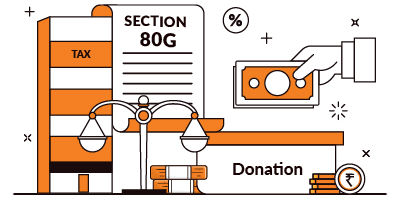
This is where many organisations unknowingly walk into trouble. The absence of an 80G certificate does not just mean missed paperwork. It creates real, measurable problems.
1. Your Donors Cannot Claim Tax Deductions
Without a valid 80G certificate, donations made to your NGO are not eligible for tax deductions under Section 80G. For individual donors, this means they give money but receive no tax benefit in return.
For corporate donors, this is often a deal-breaker. Companies have CSR policies and compliance departments. They will simply choose a different NGO that offers a valid 80G receipt.
2. You Lose Credibility with Institutional Donors and Grants
Grant-making bodies, government schemes, and CSR funds typically require a valid 80G certificate as part of the documentation. Without it, your application may be rejected outright — not because your work is not good enough, but because you fail a basic compliance check.
3. Your NGO Could Face Tax Scrutiny
Operating an NGO without proper registrations can invite attention from the Income Tax Department. If your organisation is receiving large donations and cannot demonstrate proper tax compliance, it raises red flags during scrutiny.
The Income Tax Department has been increasingly strict in reviewing NGO registrations. Since amendments introduced through the Finance Act 2020 and subsequent rules, NGOs are now required to renew their 12A and 80G registrations periodically. Failing to do so — or operating without them — can result in assessments and demands.
4. Your Income May Become Taxable
Here is a risk that catches many NGOs off guard. An NGO that holds a valid 12A registration (the income tax exemption registration) along with 80G enjoys tax-exempt status on its income. If neither registration is in place, the income of the NGO — including donations received — can be treated as regular income and taxed at applicable rates.
Imagine building a corpus of donations over several years only to find that the Income Tax Department considers it taxable. The liability, including interest and penalties, can be devastating.
5. Penalties for Non-Compliance
The Income Tax Act imposes penalties for various forms of non-compliance. Under Section 271, penalties can be levied for concealment or misreporting of income. If your NGO has been accepting donations and issuing receipts without valid 80G registration, this could be treated as misrepresentation to donors.
Key Benefits of Having a Valid 80G Certificate
If you are on the fence about getting registered, here is why it is worth doing properly and promptly.
| Key Benefit | Explanation |
|---|---|
| Donor trust and transparency | A valid 80G certificate signals that your NGO is legitimate, accountable, and recognised by the government. |
| Increased donations | Donors — especially HNIs (High Net-worth Individuals) and companies — prefer organisations where their money also earns them a tax benefit. |
| Eligibility for CSR funding | Under Section 135 of the Companies Act, 2013, companies with a certain turnover are required to spend on CSR activities. Registered NGOs with 80G and 12A are preferred partners. |
| Better access to government grants | Many central and state government schemes require NGOs to have 80G and 12A registrations as eligibility criteria. |
| Protection from tax demands | With proper registrations in place, your organisation is shielded from arbitrary income tax demands on donations and surplus. |
| Professional standing | Being registered under 80G puts you in the same bracket as established, credible nonprofits. It improves your standing when approaching foundations and international funders. |
Practical Steps to Get Your 80G Certificate
Getting registered is a process, but it is entirely manageable if you approach it systematically.
| Step | Action & Details |
|---|---|
| Step 1 |
Ensure your NGO is registered Your organisation must first be registered as a charitable trust, society, or Section 8 company. Without this base registration, you cannot apply for 80G. |
| Step 2 |
Obtain 12A Registration The 80G application typically goes alongside the 12A registration process. The 12A certificate gives your NGO income tax exemption on its receipts. You should have this before or alongside 80G. |
| Step 3 |
File Form 10A on the Income Tax Portal Post the amendments from the Finance Act 2020, Form 10A is used for fresh applications for both 12A and 80G registrations. This is filed online on the Income Tax e-Filing Portal. |
| Step 4 |
Submit Required Documents Common documents include:
|
| Step 5 |
Respond to Queries from the Commissioner The Commissioner of Income Tax (Exemptions) may raise queries or ask for additional documents. Respond within the given time frame. |
| Step 6 |
Receive the Certificate Once approved, you will receive the 80G certificate with a validity period. As per current rules, provisional registration is valid for 3 years, after which you need to apply for regular registration. |
Common Mistakes NGOs Make with 80G Registration
Knowing what others get wrong can save you significant time and money.
Not renewing on time: Many NGOs get their 80G certificate and assume the job is done. But since the Finance Act 2020, registrations have a validity period and must be renewed. Missing the renewal deadline means your certificate lapses — and you are back to square one.
Issuing 80G receipts without a valid certificate: Some NGOs continue to issue donation receipts citing 80G even after the certificate expires. This is a serious mistake. Donors who claim deductions based on invalid certificates can face notices from the Income Tax Department, and your NGO’s credibility takes a direct hit.
Applying without a CA or legal expert: The Income Tax portal and compliance language can be confusing. Many first-time applications are rejected due to incorrect documentation or form filing. Professional guidance at this stage saves a lot of back-and-forth.
Not registering activities correctly: Your NGO’s stated objects must clearly indicate charitable purposes. Vague or commercially worded objectives can lead to rejection of the 80G application.
Mixing personal and organisational finances: This is common in small NGOs but is a red flag during scrutiny. Always maintain separate bank accounts and proper bookkeeping.
Expert Tips for Staying Compliant
A few practices that experienced NGO compliance advisors recommend:
- Set a calendar reminder for renewal 6 months before expiry. Do not wait for the last minute. The portal can get congested, and processing takes time.
- File annual returns even when income is zero. Many small NGOs skip this thinking there is nothing to report. Filing demonstrates compliance and keeps your registration active.
- Keep your activities aligned with your registered objectives. If your NGO’s work has expanded, update your registration documents accordingly.
- Maintain donation registers and issue receipts with proper details. Every 80G receipt should include the name and PAN of the donor, the amount, and your 80G registration number and validity date.
- Get your accounts audited annually. Audited financials are required for renewals and give donors confidence in your transparency.
The Central Board of Direct Taxes (CBDT) regularly issues circulars with updates on NGO compliance. Keep an eye on these or work with a professional who does.
A Note on Recent Changes to 80G Rules
The Income Tax landscape for NGOs has changed considerably since 2020. Under the new regime:
- All existing registrations had to be re-applied for in the new system.
- Provisional 80G and 12A registrations are given to new NGOs, valid for 3 years.
- After 3 years, regular registration must be applied for with fresh documentation.
- NGOs must also file Form 10B or 10BB (Audit Report) along with their annual returns.
- Failure to file these on time can lead to denial of exemption for that assessment year.
The Income Tax India website has detailed instructions on all these forms. If this feels overwhelming, that is completely understandable. The rules are technical, and getting something wrong in a filing can have downstream consequences.
Should You Handle This Yourself or Get Professional Help?
Many NGO founders try to handle registrations and compliance on their own, especially in the early stages when budgets are tight. For very small, straightforward setups, this can work. But as your organisation grows and receives larger donations, the stakes get higher.
A qualified Chartered Accountant or a legal professional who specialises in NGO compliance can:
- Ensure your initial registration is filed correctly
- Help align your trust deed or MOA with 80G requirements
- Manage annual filings and audit reports
- Handle notices and queries from the Income Tax Department
- Advise on FCRA registration if you plan to receive foreign donations
If your NGO is already operational without 80G and 12A, the most important step is to assess your current compliance status as soon as possible. It is far better to regularise now than to face a demand or notice later.
Take the Next Step for Your NGO’s Compliance
Staying compliant is not just a legal obligation. It is an act of respect toward your donors, your beneficiaries, and the cause you are working for.
If you are unsure whether your NGO’s 80G registration is in order, or if you are setting up a new organisation and want to do it right from the start, speaking with a professional can give you clarity and confidence.
A short consultation with an NGO compliance expert is usually enough to understand exactly where you stand and what steps to take next. You do not have to figure this out alone.
Useful Links
- Income Tax e-Filing Portal (for Form 10A filing)
- Central Board of Direct Taxes (CBDT) – Circulars and Notifications
- Ministry of Corporate Affairs – Section 8 Company Registration
- FCRA Online Portal – Ministry of Home Affairs
- Income Tax Act, 1961 – Section 80G (India Code)