

SAI NGO & BUSINESS CONSULTANCY
Expert services for NGO, Trust, Society Registration & Compliance across India.
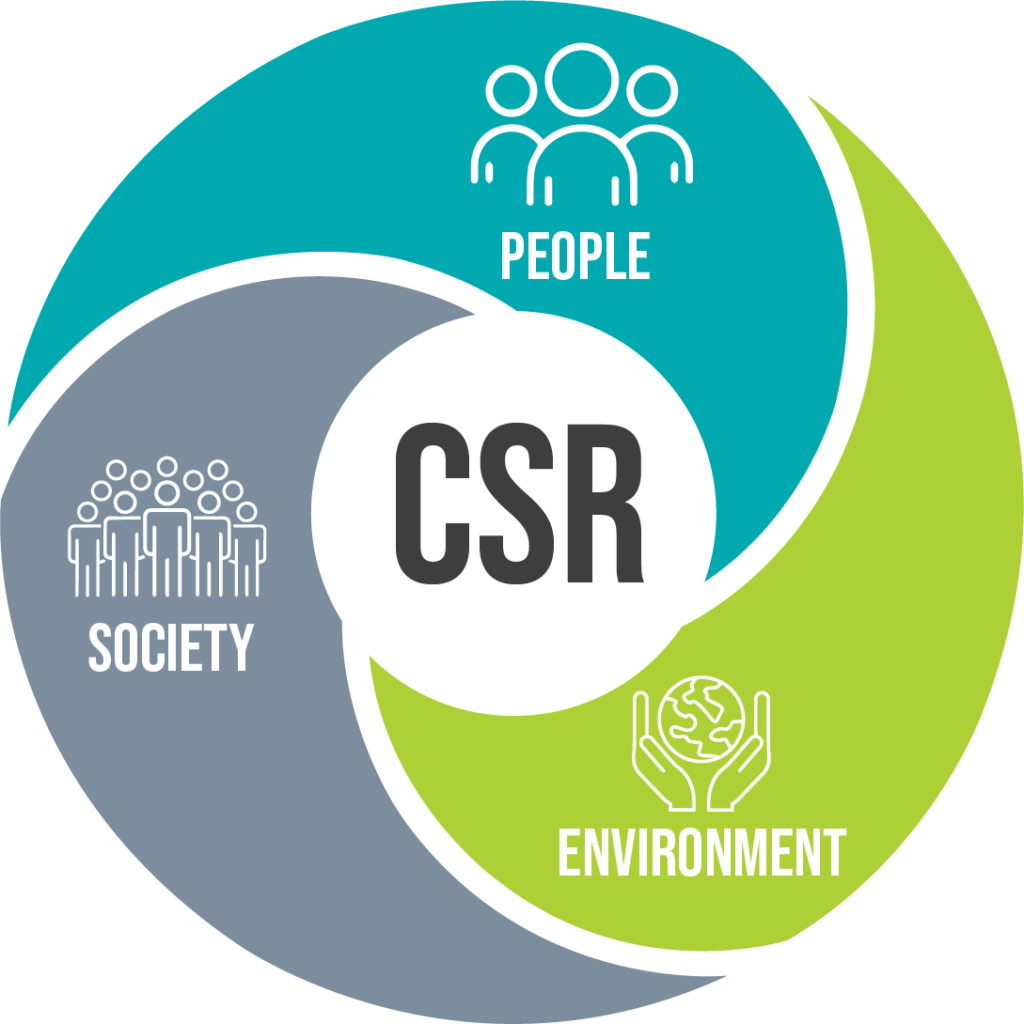
Every year, thousands of crores of rupees sit allocated under Corporate Social Responsibility (CSR) budgets across India, waiting to be channelled into meaningful social work. Yet a significant number of NGOs and implementing agencies fail to access this funding, not because their work is not impactful, but simply because they do not meet the eligibility criteria.
If you are an NGO leader, a social entrepreneur, or a CSR manager at a company, understanding who can apply for CSR funding in 2026 is no longer optional. It is the foundation of everything else.
This guide breaks it all down in plain language.
What Is CSR Funding and Why Does It Matter?

Under the Companies Act, 2013, certain companies in India are legally required to spend a portion of their profits on social development activities. This is governed by Section 135 of the Act, along with the CSR Rules of 2014 (amended in 2021).
The idea is straightforward: profitable businesses contribute back to society through education, healthcare, environment, poverty alleviation, and more. These contributions are made either directly or through implementing agencies, which includes NGOs, trusts, and Section 8 companies.
For NGOs, CSR funding can be a game-changer. It offers multi-year grants, larger ticket sizes, and a structured reporting framework that helps organisations grow sustainably.
But the process has rules. And those rules matter enormously.
Who Is Required to Spend on CSR? (Company Eligibility)
Not every company in India has a CSR obligation. The Companies Act specifies that a company must fulfil CSR spending requirements if, in the immediately preceding financial year, it meets any one of the following criteria:
- Net worth of Rs. 500 crore or more
- Turnover of Rs. 1,000 crore or more
- Net profit of Rs. 5 crore or more
If a company meets any one of these thresholds, it must constitute a CSR Committee and spend at least 2% of its average net profits of the preceding three financial years on CSR activities.
This applies to Indian companies as well as foreign companies with branches or project offices in India.
Key Point for Companies
The 2021 amendment to CSR rules introduced significant changes, including the requirement to spend unspent CSR funds within a defined period or transfer them to a government fund. Companies that previously treated CSR as a flexible option now operate under tighter compliance requirements. This makes it more important than ever for companies to identify credible, registered implementing partners.
Who Can Apply for CSR Funding? Eligibility Criteria for NGOs and Implementing Agencies
This is where most of the confusion lies. Not every NGO automatically qualifies to receive CSR funding. The Ministry of Corporate Affairs has laid down specific eligibility conditions.
Eligible Entities Under Rule 4(1) of CSR Rules
The following types of organisations can implement CSR activities and receive CSR funds:
| # | Eligible Entity | Description & Criteria |
|---|---|---|
| 1 | Section 8 Companies | Companies registered under Section 8 of the Companies Act, 2013 (non-profit companies) are eligible, provided they have an established track record of at least three years in the relevant field. |
| 2 | Registered Public Trusts | A public charitable trust registered under the relevant state laws is eligible if it has been operational for at least three years. |
| 3 | Registered Societies | Societies registered under the Societies Registration Act, 1860, or equivalent state legislation, with a minimum of three years of operational experience. |
| 4 | Entities Established by Central or State Government | Statutory bodies, autonomous institutions, and entities set up under an Act of Parliament or State Legislature are also eligible. |
| 5 | Company’s Own Foundation | A company may set up its own Section 8 company, trust, or society specifically for CSR implementation. These are considered eligible from the date of establishment if the parent company has an established track record. |
| 6 | International Organisations | Certain international organisations notified by the Ministry of Finance are eligible to engage with Indian companies on CSR projects. |
The Three-Year Track Record Requirement
One of the most important eligibility conditions for NGOs is the three-year track record rule.
To qualify, an NGO must demonstrate:
- At least three years of operational experience in the activity area relevant to the proposed CSR project
- A proven history of carrying out programmes in that domain (supported by annual reports, financial statements, and project documentation)
- Proper governance structures including an active board, audited accounts, and filed returns
This is not a soft suggestion. Companies and their CSR committees are expected to verify this before engaging an implementing partner. If your organisation is newly registered or lacks documented work history, this criterion will likely be a barrier until you can build that record.
CSR Registration on the MCA Portal: Now Mandatory
Since the 2021 amendment, NGOs and other implementing agencies must be registered on the MCA21 portal using Form CSR-1 to receive CSR funds from companies.
Here is what the CSR-1 registration process involves:
- Who must register: All entities (trusts, societies, Section 8 companies) seeking CSR funds from companies (other than the company’s own foundation)
- What you need: PAN, registration documents, details of trustees/directors, and a digital signature
- What you get: A unique CSR Registration Number (CRN), which companies must quote when transferring funds
- Validity: Ongoing, but the entity must maintain compliance
Without this registration number, a company legally cannot transfer CSR funds to your organisation. If you have not done this yet, it should be your first step.
You can register at the Ministry of Corporate Affairs portal.
Activities Covered Under Schedule VII
Even if your organisation is eligible, the project or programme must fall under the Schedule VII of the Companies Act, 2013. This schedule lists the approved areas for CSR spending.
The key areas include:
- Eradicating hunger, poverty, and malnutrition
- Promoting education, including special education and vocational skills
- Promoting gender equality and women empowerment
- Healthcare, including preventive healthcare and sanitation
- Environmental sustainability, ecological balance, and conservation
- Protection of national heritage, art, and culture
- Rural development and agro-forestry
- Slum area development
- Disaster management and relief
- Promotion of sports
Activities outside this list, or those that primarily benefit the company’s own employees or promoters, do not qualify as CSR expenditure.
Common Mistakes NGOs Make When Applying for CSR Funding

Even eligible NGOs often hurt their chances by making avoidable errors. Here are the most common ones:
| # | Mistake | Explanation |
|---|---|---|
| 1 | Not registering on the MCA portal before approaching companies | Many NGOs skip this critical step and get rejected at the administrative stage itself. Registration on the MCA portal is mandatory before applying for CSR funding. |
| 2 | Lacking audited financials for three consecutive years | Verbal claims about experience are not enough. Companies require proper documentation and audited financial statements for at least three years to assess credibility. |
| 3 | Applying for activities outside Schedule VII | Activities such as advocacy campaigns or awareness programs that are not linked to direct implementation often fall outside the permitted CSR scope under Schedule VII. |
| 4 | Misaligned project proposals | NGOs sometimes send generic proposals without aligning them to the company’s CSR focus areas or geographical priorities, reducing their chances of approval. |
| 5 | Ignoring ongoing compliance | After receiving funds, NGOs must submit utilisation certificates and impact reports. Failure to comply affects future funding opportunities and damages organisational credibility. |
| 6 | Not maintaining a separate CSR fund account | CSR funds must be kept and accounted for separately from other organisational funds to ensure transparency and proper financial tracking. |
Expert Tips to Strengthen Your CSR Funding Application
Whether you are an NGO looking to access CSR funds or a company building a CSR portfolio, these practical steps will help:
For NGOs:
- Build your documentation early. Project reports, beneficiary data, photographs, and annual reports are your credibility currency.
- Align your programme areas with at least two or three Schedule VII categories for broader relevance.
- Develop a clear Theory of Change for your programmes so companies can see how funds translate into outcomes.
- Get your CSR-1 registration done immediately if you have not. This is non-negotiable.
- Approach mid-size companies (Rs. 5–50 crore CSR budget) first. They often need credible partners more urgently than large corporates who already have established foundations.
For Companies:
- Conduct proper due diligence on your implementing partners. The CSR Committee is accountable if funds are misused.
- Prefer NGOs that have both the MCA registration and a clean FCRA status (if cross-border activity is involved).
- Use Impact Assessment reports for projects with a total outlay of Rs. 1 crore or more, as required under the 2021 rules.
- Document everything. The CSR Annual Report (disclosed in the company’s annual report) must reflect all projects, amounts, and outcomes.
What Happens If Companies Do Not Spend Their CSR Budget?
This is a question many CSR managers grapple with. Since the 2021 amendment:
- Unspent CSR funds related to ongoing projects must be transferred to a Special Account within 30 days of the financial year end and utilised within three years.
- Unspent funds from non-ongoing projects must be transferred to a government fund such as PM CARES or the Clean Ganga Fund within six months of the financial year end.
- Failure to comply can result in penalties under the Companies Act.
This regulatory pressure is actually good news for credible NGOs. Companies are incentivised to find implementing partners rather than let funds lapse.
Should You Get Professional Help?
Navigating CSR eligibility, MCA registrations, Schedule VII compliance, and impact documentation is genuinely complex. Many NGOs and companies benefit from working with professionals who specialise in CSR advisory and grant facilitation.
A good CSR consultant can help you:
- Assess your eligibility and readiness
- Prepare compliant documentation and proposals
- Match NGOs with the right corporate partners
- Set up monitoring and evaluation frameworks
- Handle regulatory compliance and reporting
If you are unsure where your organisation stands or want to make sure your CSR strategy is watertight, speaking to a specialist before you apply or disburse funds is a sensible step.
Feel free to reach out for a consultation to assess your CSR readiness or explore funding partnerships. A single conversation can save months of back-and-forth.
Useful Links
- Ministry of Corporate Affairs (MCA) Portal – CSR-1 Registration
- Companies Act, 2013 – Section 135 (CSR Provisions)
- CSR Rules 2014 (Amended 2021) – MCA Notification
- Schedule VII of the Companies Act, 2013
- National CSR Portal – Government of India (India’s leading CSR database and matching platform)
- NITI Aayog NGO Darpan Portal (For NGO registration and credibility)
- Income Tax Department – Section 80G and 12A Registration