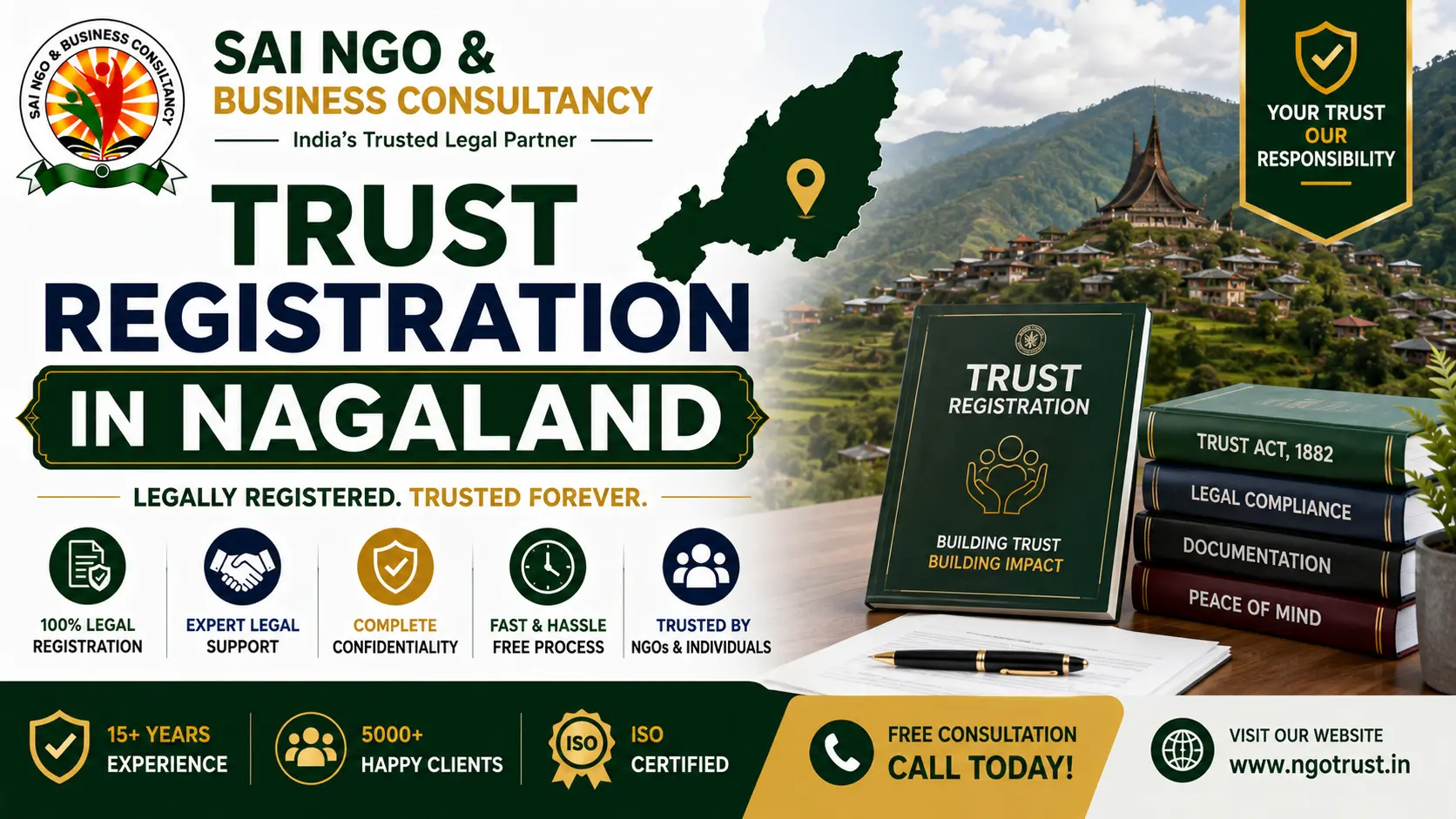
If you are planning to start an NGO in Nagaland, a trust is one of the simplest and most common structures to choose. It needs fewer people to start, has lower compliance compared to a society, and is well suited for charitable, religious, or educational work. This guide walks you through everything you need to know about trust registration in Nagaland, from documents to timelines to what happens after your trust is registered.
What Is a Trust and Why Register One in Nagaland?
A trust is created when a person (called the settlor or author) transfers property or assets to another person or group (called trustees), who then manage it for the benefit of a third party or the general public. When this benefit is meant for the public, it becomes a public charitable trust.
Registering your trust in Nagaland gives it a legal identity separate from its founders. This matters because an unregistered trust cannot open a bank account in its own name, cannot own property, and cannot apply for the tax exemptions and grants that most donors and government bodies expect to see before they support an organisation.
A registered trust in Nagaland can:
- Open a dedicated bank account in the trust's name
- Apply for 12A and 80G tax exemption certificates
- Receive donations and, after FCRA approval, foreign contributions
- Sign contracts, own property, and enter legal agreements
- Build credibility with donors, CSR partners, and government departments
Who Can Register a Trust in Nagaland?
Trust registration in Nagaland is fairly open. Here is who is generally eligible to start one:
- Any individual who is a major (18 years or older) and of sound mind
- A group of individuals coming together for a shared charitable, religious, or educational goal
- Existing organisations wanting to formalise their charitable activities under a trust structure
Most consultants recommend a minimum of two trustees, one acting as the author or settlor of the trust and at least one other as a trustee, though having three or more trustees is common practice for better governance and smoother bank account opening.
What Documents Do You Need for Trust Registration in Nagaland?
Keeping your documents ready in advance can save weeks of back and forth. Here is the typical checklist:
Documents From the Settlor and Trustees
- PAN card copies of the settlor and all trustees
- Aadhaar card or other valid address proof
- Passport-size photographs of the settlor and trustees
- Occupation and contact details of each trustee
Documents Related to the Trust Itself
- Trust deed, drafted on non-judicial stamp paper of the required value
- Proof of the registered office address, such as an electricity bill or rent agreement
- No-objection certificate from the property owner, if the office is on rented premises
- Details of the trust's objectives, name, and proposed activities
The trust deed is the single most important document in this process. It should clearly state the name of the trust, its objectives, the details of the settlor and trustees, the rules for adding or removing trustees, and how the trust's funds and property will be managed.
What Is the Step-by-Step Process for Trust Registration in Nagaland?
Trust registration in Nagaland generally follows these steps:
Step 1: Choose a Unique Name
Pick a name for your trust that reflects its purpose and is not already in use by another registered organisation.
Step 2: Decide the Objectives and Draft the Trust Deed
Write down clear, specific objectives for the trust and prepare the trust deed with the help of a legal professional, since small drafting errors can cause delays later.
Step 3: Pay Stamp Duty and Execute the Deed
The trust deed is printed on non-judicial stamp paper of the appropriate value and signed by the settlor and trustees in the presence of witnesses.
Step 4: Submit the Application to the Sub-Registrar
The signed trust deed, along with the required documents and application form, is submitted at the office of the Sub-Registrar or Registrar of Assurances having jurisdiction over the trust's registered address.
Step 5: Verification and Certificate Issuance
Once the registrar verifies the documents and the deed, the trust is entered into the official register, and a certified copy along with the registration certificate is issued to the trustees.
How Long Does Trust Registration in Nagaland Take?
In most cases, trust registration in Nagaland takes anywhere from a couple of weeks to a couple of months. The exact timeline depends on how complete your documents are and how busy the Sub-Registrar's office is at the time of filing.
Applications with error-free trust deeds and complete supporting documents tend to move faster, while missing paperwork or unclear objectives can add several extra weeks to the process.
What Does Trust Registration in Nagaland Cost?
The cost of trust registration in Nagaland depends on a few factors:
- Stamp duty on the trust deed, which varies based on the value declared
- Registration fees charged by the Sub-Registrar's office
- Professional or consultancy fees, if you choose to work with a lawyer or firm for drafting and filing
There is no single fixed number that applies to everyone, since stamp duty and government charges can change from time to time. It is best to check current rates with the local Sub-Registrar's office or a professional before budgeting for registration.
Trust vs Society vs Section 8 Company: Which One Should You Choose in Nagaland?
Trust, society, and Section 8 company are the three common ways to register a non-profit in India, and each fits a different kind of work.
- Trust: Best for charitable, religious, or family welfare work. Needs a minimum of two trustees and is governed by the Indian Trusts Act, 1882.
- Society: Suited for cultural, educational, or sports-related organisations. Needs a minimum of seven members and is registered under the Societies Registration Act, 1860.
- Section 8 Company: Ideal for larger non-profits planning to raise CSR funding at scale. Needs a minimum of two directors and is registered under the Companies Act, 2013.
If your work is smaller in scale, family-driven, or focused on a specific charitable cause, a trust is usually the simplest and quickest structure to set up in Nagaland.
What Comes After Registration? 12A, 80G, FCRA and NGO Darpan
Getting your trust deed registered is only the first step. To function as a full-fledged NGO and receive tax-deductible donations, most trusts also need the following:
- 12A registration: gives the trust exemption from paying income tax on its surplus income. Apply through the Income Tax e-filing portal.
- 80G registration: lets donors claim a tax deduction on the amount they donate to your trust, which makes fundraising noticeably easier.
- NGO Darpan registration: a government listing on the NGO Darpan portal run by NITI Aayog, often required for government grants and CSR partnerships.
- FCRA registration: needed only if the trust plans to receive foreign donations, applied for through the FCRA online portal.
Trusts working in Nagaland on legal-aid, education, or compliance-heavy projects often need all four of these in place before they can approach larger donors or CSR-funded companies with confidence.
Common Mistakes to Avoid During Trust Registration in Nagaland
- Writing vague or overly broad objectives in the trust deed, which can create problems later during 12A or 80G scrutiny
- Skipping legal review of the trust deed to save on cost, only to face rejection or delays
- Choosing a registered office address without proper ownership or rental proof
- Not deciding clear rules for adding, removing, or replacing trustees
- Delaying 12A and 80G applications after registration, which pushes back fundraising timelines
Most of these mistakes are avoidable with careful planning at the drafting stage itself, which is why many founders choose to have a professional review the trust deed before it is signed and stamped.
Getting Your Trust Registration Right the First Time
Trust registration in Nagaland is not complicated once you know the steps, but small errors in the trust deed or missing documents can cost you weeks. If you are setting up a trust and want the drafting, filing, and post-registration compliance handled correctly from the start, it helps to have someone experienced review your paperwork before you submit it.
If you would like a second opinion on your trust deed or want help planning your 12A, 80G, and FCRA timeline, feel free to reach out for a consultation. We are happy to walk you through it.
Useful Links