
SAI NGO & BUSINESS CONSULTANCY
Expert services for NGO, Trust, Society Registration & Compliance across India.
A difficult volunteer is someone whose behavior, attitude, or reliability repeatedly gets in the way of your NGO’s work, your team’s morale, or the people you serve. The best way to handle one is to set clear expectations, talk early and privately, match the person to the right role, put your rules in writing, and know when to part ways respectfully.
Every NGO leader has met this person. The volunteer who ignores the schedule. The one who argues with staff in front of beneficiaries. The one who quietly takes over a project that was never theirs.
You are grateful for their time, so speaking up feels awkward. But staying silent usually costs more than the conversation would. Dealing with difficult volunteers is not about being harsh. It is about protecting your mission, your team, and the volunteers who show up with a good attitude.
This guide covers why problems start, five strategies that work in real NGOs, and when it makes sense to bring in outside help.
Why Do Volunteers Become Difficult?
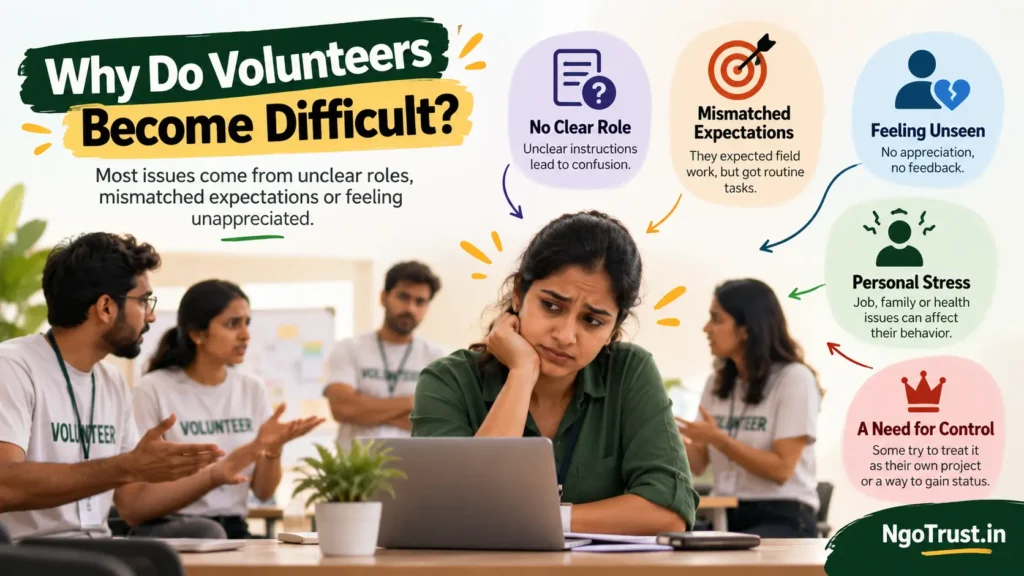
Most volunteers become difficult because of unclear roles, mismatched expectations, or feeling unappreciated. Very few are simply “bad people.”
Before you label someone, look for the cause. These are the most common ones:
- No clear role. When nobody explains the job, people fill the gap with their own ideas.
- Mismatched expectations. They expected to work with children in the field and were handed a pile of photocopying.
- Feeling unseen. No thanks, no feedback, no sense that the work matters.
- Personal stress. Job pressure, family issues, or health worries often spill into volunteer work.
- A need for control. Some people treat a volunteer role as their own project or a way to gain status.
Knowing the cause changes your approach. A confused volunteer needs clarity. A bored one needs a better task. A controlling one needs firm boundaries.
How Do You Deal With Difficult Volunteers? 5 Strategies That Work
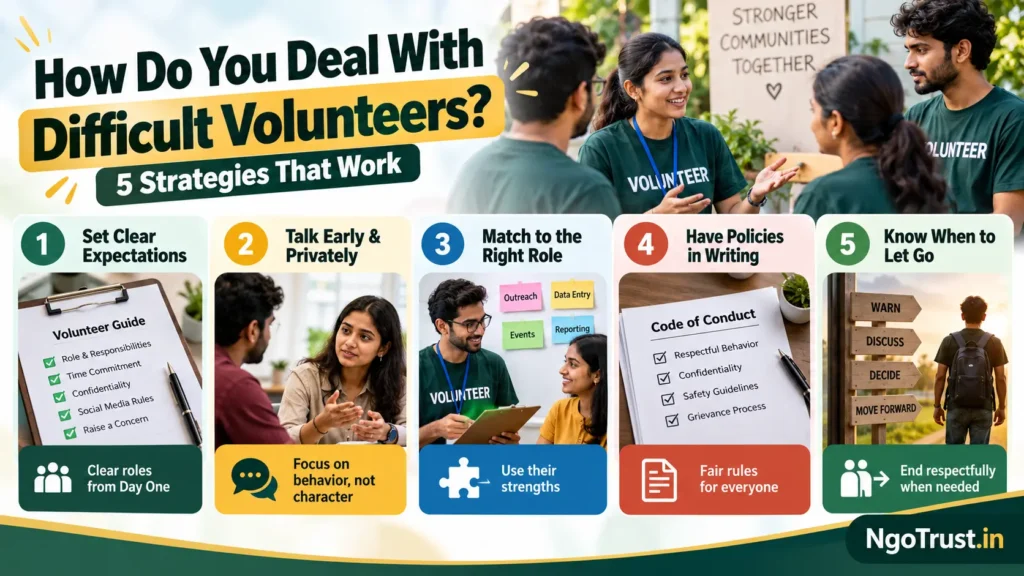
The short answer: start with clarity, act early, and keep every conversation about behavior, not character. Here is how that looks in practice.
1. Set Clear Expectations Before Day One
A lot of volunteer management problems begin at onboarding. Someone says “just come and help,” and nobody spells out what help actually means.
Give every volunteer a simple one-page role description and a short volunteer agreement. Even a signed letter with dates and responsibilities protects both sides. It should cover:
- Their role and who they report to
- Time commitment and how much notice they should give if they need to step back
- Confidentiality around beneficiary details and donor data
- Rules for photos and social media posts
- How to raise a concern or complaint
Add a 30-minute orientation where you explain your mission and walk through these points in person. It feels like extra work, but it saves you many uncomfortable talks later.
2. Talk Early, Talk Privately, Talk About Behavior
Do not wait for the third complaint. Small issues turn into habits, and habits turn into culture.
Speak to the volunteer one on one, not in the group chat and not in front of others. Use a simple structure: say what you saw, explain the effect, ask for their side, and agree on the next step.
Compare these two openings:
- “You are unreliable.”
- “Last Saturday you arrived an hour late to the food distribution. The families waited and the team had to rush. Is something making the schedule hard for you?”
The second one deals with facts and invites a reply. Often the reply is the most useful part. You may learn that the volunteer travels two hours to reach you, or that they were never told the start time.
After the meeting, send a short message summarizing what you agreed. It keeps things clear and gives you a record if the issue returns.
3. Match the Person to the Right Role
Sometimes the volunteer is not the problem. The role is.
A talkative person may struggle with data entry but shine at community outreach. A detail-obsessed volunteer who irritates the team in meetings may be perfect for checking reports. Ask what skills they have and what they enjoy, then adjust.
For volunteers who want control, give them a defined project with a clear start, end, and limits. They get ownership, and you keep the boundaries. A trial period at the start of any new role also helps, because either side can change course without awkwardness.
4. Put Simple Policies in Writing
A short code of conduct and a basic grievance process make you fair and consistent. When everyone follows the same written rules, it is harder for anyone to claim favoritism.
Written policies also take the personal edge out of hard conversations. You can say, “Our volunteer policy asks everyone to give a week’s notice,” instead of “You let us down.”
Keep the document to two or three pages. It should cover respectful behavior, harassment, conflicts of interest, handling of money, and child and vulnerable-person safety if your NGO works with those groups. Name one coordinator who handles concerns, plus a trustee or board member for anything serious. Share the policy at onboarding and review it once a year.
5. Know When and How to Let a Volunteer Go
Some situations do not improve, even after honest conversations. Repeated no-shows after warnings, disrespect toward beneficiaries, breaking confidentiality, or safety risks are good examples.
Ending a volunteer relationship is not a failure. Keeping a harmful volunteer often costs you several good ones. When you reach that point:
- Review your notes from earlier conversations
- Meet privately and be direct about the reason
- Thank them sincerely for whatever they contributed
- Collect keys, materials, and any access to accounts or shared drives
- Update your team briefly, without gossip or details
For serious matters such as safeguarding concerns or misuse of funds, act immediately and involve your board. Legal advice is wise in these cases.
What Are the Most Common Types of Difficult Volunteers?
You will recognize a few patterns. Each one responds to a slightly different approach:
- The unreliable one. Agree on a smaller, specific commitment they can actually keep, then build from there.
- The know-it-all. Respect their experience, and channel it into a defined advisory task instead of letting it spill into every meeting.
- The gossip. Address it directly and privately. Point to your code of conduct and explain how it affects team trust.
- The overstepper. Restate their role and decision limits clearly. If they keep crossing the line, put it in writing.
How Can You Prevent Volunteer Problems Before They Start?
Prevention takes less energy than repair. A few habits make a big difference.
Ask people why they want to volunteer before you assign anything. A short application and a friendly interview are enough for most roles. For sensitive work, such as working with children, add reference checks.
Start new volunteers with small tasks and increase responsibility as trust grows. Say thank you often, and mean it. A personal note, a certificate, or a mention in a team meeting costs almost nothing. Ask for feedback every few months so small frustrations surface early.
Volunteers who feel valued rarely become difficult. For more ideas on recognition and engagement, the Points of Light network and VolunteerMatch share useful resources for organizations that work with volunteers. The United Nations Volunteers programme also publishes material on volunteering around the world.
When Should an NGO Ask for Professional Help?
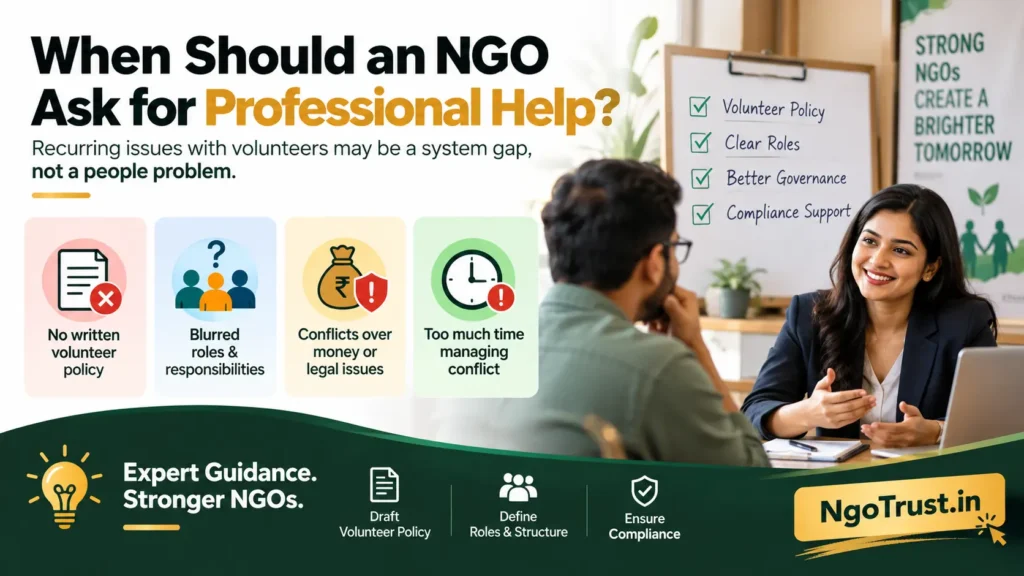
If the same problems keep repeating with different volunteers, you probably have a system gap, not a people problem.
It may be time to talk to an expert when:
- You have no written volunteer policy or code of conduct
- Roles between trustees, staff, and volunteers are blurry
- A conflict involves money, safeguarding, or a legal threat
- You spend more time managing conflict than running programs
An experienced NGO consultant can help you draft a volunteer policy, define roles, and check that your governance documents and compliance are in order, whether you run a trust, a society, or a Section 8 company. At ngotrust.in, we help NGOs build this kind of groundwork so leaders can focus on the work they started the NGO for.
You do not have to wait for a crisis. A short conversation early on can save months of stress later.
FAQ: Dealing With Difficult Volunteers
How do you handle a difficult volunteer politely?
Speak with them privately, describe the specific behavior, explain how it affects the team or beneficiaries, and ask for their view. Then agree on one clear next step. Staying calm and factual keeps the conversation respectful.
Can an NGO remove a volunteer?
Yes. Volunteers are not employees, and an NGO can end a volunteer relationship, especially when the person breaks your code of conduct. It helps to have a signed volunteer agreement and written policy in place, and to document earlier warnings. For serious cases, take legal advice.
What is the best way to prevent conflicts with volunteers?
Clear onboarding. Give each volunteer a written role description, a short orientation, and a code of conduct. Most conflicts start when expectations were never stated.
How do you deal with a volunteer who gossips or spreads negativity?
Address it early and in private. Give an example of what you heard, explain how it affects team trust, and point to your code of conduct. If it continues, issue a written warning and consider whether the volunteer is still a good fit.
Does an NGO need a written volunteer policy?
It is strongly recommended. A written policy makes your decisions fair and consistent, protects vulnerable beneficiaries, and gives you solid ground when you must handle a complaint. It also shows donors and partners that your NGO is well run.
How do you keep good volunteers motivated?
Give them meaningful tasks, regular thanks, and honest feedback. Let them see the impact of their work. People stay where they feel useful and respected.
Keep Your Best Volunteers and Your Peace of Mind
Difficult volunteers are part of running any NGO. With clear roles, early conversations, and simple written rules, most situations can be handled calmly, and your strongest volunteers will thank you for it.
If you would like a second opinion on a volunteer situation, or help setting up policies and governance documents that prevent these problems, feel free to get in touch with our team at ngotrust.in. We are happy to talk it through.
Useful Links