
SAI NGO & BUSINESS CONSULTANCY
Expert services for NGO, Trust, Society Registration & Compliance across India.
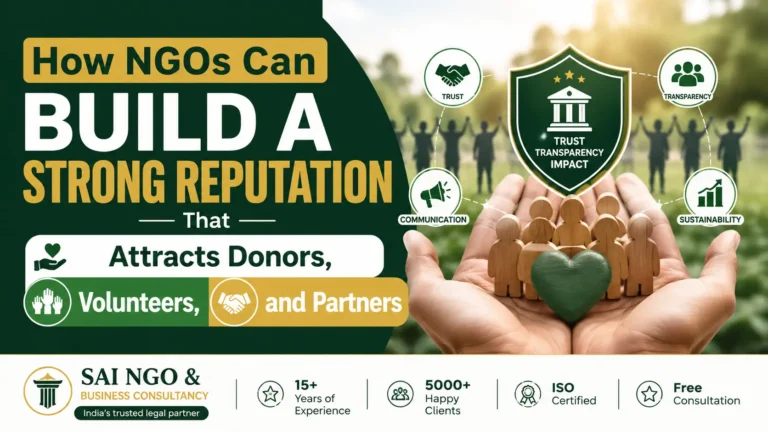
A strong NGO reputation is built through consistent transparency, verified legal compliance, visible impact, and honest communication with donors, volunteers, and partners. It is not created overnight. It grows steadily when an organisation proves, again and again, that it does what it says it will do.
If you run an NGO, you already know the hard part is not just doing good work. The hard part is getting people to notice, trust, and support that work. A strong reputation is what turns a good NGO into one that donors seek out, volunteers stay loyal to, and partners are proud to be associated with.
In this post, we will walk through exactly how NGOs can build a strong reputation step by step, in simple and practical terms. No jargon. Just what actually works.
Why Reputation Matters So Much for NGOs
Unlike a business selling a product, an NGO is asking people to believe in a mission. Donors give money based on trust. Volunteers give their time based on trust. Partners lend their name based on trust.
A strong reputation directly affects:
• How much funding you receive
• How many volunteers apply and stay
• Whether corporates choose you for CSR partnerships
• How easily you pass government scrutiny and audits
• Whether the media and public speak positively about you
In short, reputation is not a soft, optional thing. It is closely tied to the survival and growth of your organisation.
What Builds an NGO’s Reputation?
An NGO’s reputation is built on four core pillars: legal transparency, financial accountability, visible impact, and consistent communication. When these four are strong, trust follows naturally.
Let us look at each one in detail.

1. Legal Transparency and Proper Registration
Nothing damages an NGO’s reputation faster than doubts about its legitimacy. Donors and partners want proof that your organisation is legally sound.
This means keeping the following in order and easily shareable:
• Society, Trust, or Section 8 registration certificates
• 12A and 80G tax exemption certificates
• FCRA registration, if you receive foreign funds
• Updated GST and ITR filings
• Darpan registration for government scheme eligibility
When these documents are current and easy to produce, it sends a clear signal: this NGO is serious, careful, and here to stay.
2. Financial Accountability
Donors want to know their money is being used the way it was promised. This is one of the biggest reasons donors stop giving.
Good practices here include:
• Publishing annual reports with clear income and expense details
• Getting accounts audited every year
• Sharing how much of each donation goes directly to programs
• Being upfront about administrative and fundraising costs
You do not need to be a large organisation to do this well. Even small NGOs can publish a simple, honest breakdown of funds and earn a lot of goodwill.
How Can NGOs Show Their Impact to Donors?
NGOs can show impact by sharing real stories, numbers, and before-and-after results instead of vague claims. People trust specifics far more than general statements.
Some simple ways to do this:
• Replace “we helped many families” with “we supported 240 families across 12 villages this year”
• Share short video testimonials from beneficiaries
• Post regular photo updates from the field
• Create yearly impact reports with clear data
• Show a visible before-and-after when possible, such as a school building or a health camp
Impact reporting does not need to be expensive or complicated. Consistency matters more than polish. Even a simple monthly update builds far more trust than a beautifully designed report published once a year.
How Should NGOs Communicate With Donors and Volunteers?
NGOs should communicate openly, respond quickly, and avoid making promises they cannot keep. Silence is one of the fastest ways to lose donor and volunteer trust.
Keep Donors in the Loop
• Send a thank-you message within a day of receiving a donation
• Share periodic updates on how funds were used
• Be honest if a project is delayed or facing challenges
Respect Volunteers’ Time and Effort
• Give volunteers clear roles and expectations
• Recognise their contribution publicly, with permission
• Ask for feedback and actually act on it
Volunteers who feel valued often become long-term supporters, and sometimes even donors themselves.
How Can NGOs Attract Corporate and CSR Partners?
NGOs attract corporate partners by demonstrating compliance, measurable outcomes, and professional documentation that makes CSR reporting easy for the company.
Companies choosing an NGO partner usually look for:
• Valid 12A, 80G, and CSR-1 registration
• A clear track record with data-backed results
• Proper documentation for their own CSR compliance and reporting
• A professional website and updated social presence
If you are new to CSR partnerships, resources like the Ministry of Corporate Affairs CSR portal explain compliance requirements companies must follow, which can help you understand what they are actually looking for in an NGO partner.
The Role of Online Presence in NGO Reputation
In today’s world, most donors and volunteers check an NGO online before they commit. Your website, social media, and even Google reviews shape first impressions long before anyone speaks to your team.
A trustworthy online presence usually includes:
• A clean, updated website with clear mission and contact details
• Active social media showing real, recent work
• Positive Google Business reviews and ratings
• Media mentions or press coverage, if available
Clear listing on government platforms like NGO Darpan, which adds an extra layer of verified credibility.
A well-maintained online presence does not just attract donors. It also reassures existing supporters that the organisation is active and accountable.
Common Mistakes That Damage NGO Reputation
Even well-meaning NGOs can hurt their reputation without realising it. Some common mistakes include:
• Letting registrations like 80G or FCRA lapse without renewal
• Being vague about how donations are used
• Overpromising results that are not realistic
• Ignoring donor or volunteer queries for long periods
• Having an outdated or broken website
• Inconsistent branding across platforms
Fixing these issues is often simpler than NGOs expect. Most come down to better documentation, timely renewals, and more consistent communication.
A Simple Reputation-Building Checklist for NGOs
Here is a short checklist you can use to review where your NGO currently stands:
• Are all legal registrations (12A, 80G, FCRA, Darpan) valid and up to date?
• Do you publish annual reports with clear financial details?
• Do you share regular, specific impact updates?
• Do donors and volunteers get timely responses?
• Is your website professional and current?
• Are your social media profiles active?
If you find gaps in even two or three of these areas, that is often enough to hold back donor and partner confidence, even when your ground work is genuinely strong.
Frequently Asked Questions
How long does it take to build a strong NGO reputation?
It usually takes one to three years of consistent, transparent work to build a strong reputation. Reputation grows through repeated proof, not a single campaign or announcement.
What documents matter most for NGO credibility?
12A, 80G, FCRA (if applicable), and Darpan registration matter most, along with audited annual financial statements. These documents are usually the first things serious donors and partners check.
Can a small or new NGO still build donor trust?
Yes. Small and new NGOs can build trust quickly by being fully transparent about finances, sharing honest impact updates, and keeping all legal compliance current, even if their overall program size is still small.
Does social media really affect NGO reputation?
Yes. Active, honest social media presence reassures donors and volunteers that the NGO is currently active and doing real work. Inactive or outdated profiles can raise doubts, even for NGOs doing good work on the ground.
What is the fastest way to lose NGO reputation?
The fastest way to lose reputation is a lack of transparency, such as unclear fund usage, lapsed registrations, or ignoring donor questions. Trust drops much faster than it builds.
Building Trust Takes the Right Foundation
A strong reputation is really the sum of many small, consistent actions: valid registrations, honest reporting, timely communication, and visible impact. None of these require a huge budget. They mostly require attention and consistency.
If your NGO’s registrations, compliance, or documentation need review or renewal, it often helps to have someone experienced take a look, so you can focus on the actual work of your mission.
At SAI NGO & Business Consultancy, we work with NGOs across India on registration, 12A, 80G, FCRA, and compliance matters. If you would like a second opinion on where your NGO currently stands, feel free to reach out for a quick consultation.
Useful Links
• Ministry of Corporate Affairs – CSR Portal