
SAI NGO & BUSINESS CONSULTANCY
Expert services for NGO, Trust, Society Registration & Compliance across India.
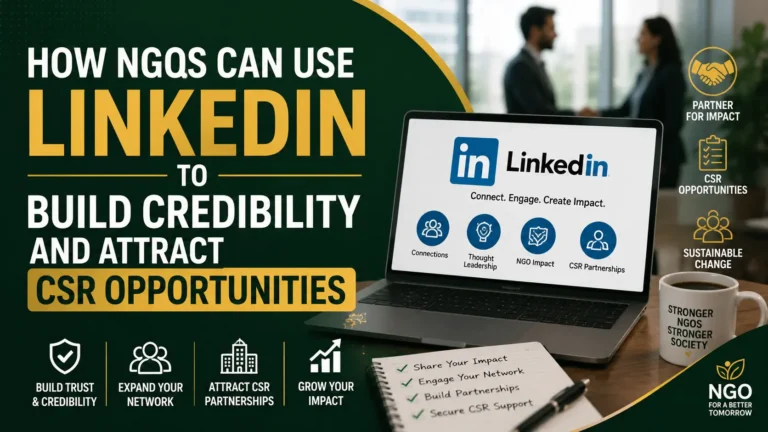
LinkedIn is a professional networking platform where NGOs can showcase their work, connect with corporate decision-makers, and build the kind of visible track record that companies look for before awarding CSR funding. Used well, it turns an NGO’s page into a trust signal that supports every grant application and partnership pitch.
Most NGOs in India spend months writing proposals, filling government forms, and meeting compliance rules. But very few spend time on something simpler and often more effective: showing up consistently on LinkedIn.
Corporate CSR teams do their homework before writing a cheque. They check websites, read annual reports, and increasingly, they check LinkedIn. If your NGO’s page looks inactive or thin, it raises doubt. If it looks active, transparent, and professional, it builds confidence before a single meeting happens.
This post breaks down exactly how NGOs can use LinkedIn to build credibility and attract CSR opportunities, step by step.
Why Does LinkedIn Matter for NGOs Seeking CSR Funding?
LinkedIn matters because it is where corporate CSR heads, HR leaders, and business owners actually spend their working hours. Unlike Facebook or Instagram, LinkedIn is built around professional decisions, and CSR budgeting is exactly that: a professional, board-level decision.
A few reasons this platform works well for NGOs:
• CSR teams often research potential NGO partners on LinkedIn before shortlisting them.
• A well-maintained page signals that the NGO is organised, active, and accountable.
• LinkedIn posts get seen by people who influence funding decisions, not just casual browsers.
• It is free to use, which matters for NGOs working with limited budgets.
In short, your LinkedIn presence often works as a silent reference check. Companies use it to confirm what your website and proposal already claim.
What Does “Building Credibility” Actually Mean on LinkedIn?

Building credibility on LinkedIn means giving visitors clear, honest proof that your NGO does what it says it does. It is not about follower count. It is about trust signals that a busy CSR manager can verify in under two minutes.
These signals typically include:
• A complete, accurate organisation page
• Regular updates about ongoing projects
• Photos and short videos from the field
• Mentions of registrations like 12A, 80G, FCRA, or CSR-1, where applicable
• Testimonials, partner logos, or media coverage
• A leadership team that is visible and active, not hidden
When these elements are in place, an NGO stops looking like a name on a list and starts looking like a working organisation with a real footprint.
Does a Verified LinkedIn Page Really Help?
Yes. A verified or fully completed LinkedIn Page adds a layer of trust that an unverified or half-filled page cannot match. It shows visitors that someone is actively managing the presence, not that it was created once and forgotten.
How Can NGOs Set Up a Credible LinkedIn Presence?
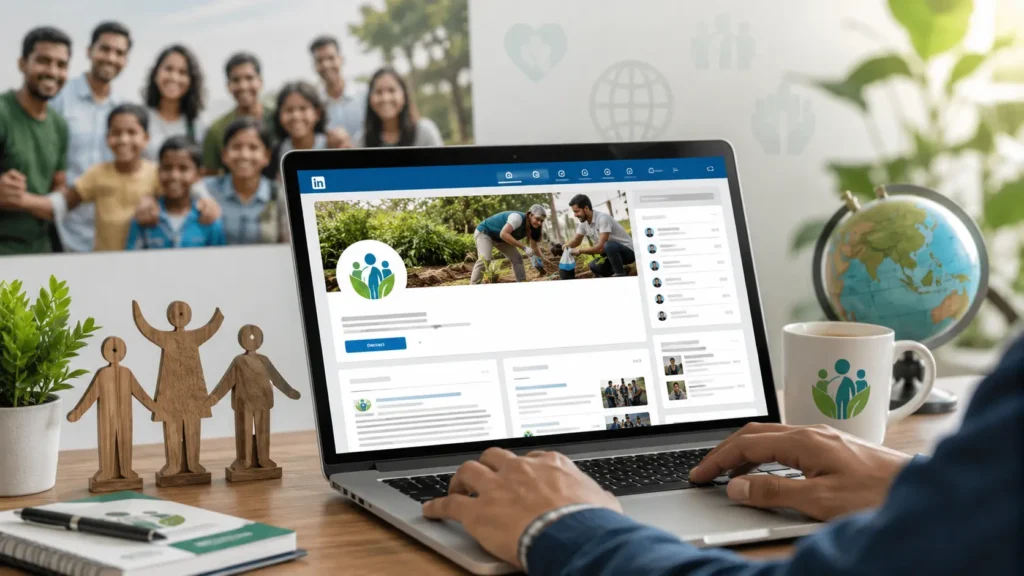
Setting up a credible presence starts with the basics, done properly, before any content strategy comes into play.
1. Complete Every Section of the Organisation Page
Fill in the mission statement, founding year, registration details, location, website link, and specialities. An incomplete profile makes even genuine NGOs look unprepared.
2. Use a Clear Logo and Cover Image
The logo should match what appears on your website and letterhead. The cover image can show your team in action, which is more convincing than a stock photo.
3. Add Leadership Profiles, Not Just the Page
CSR teams often check the founder’s or director’s personal LinkedIn profile too. Make sure key people at the NGO have updated, professional profiles that link back to the organisation.
4. Link Your Website and Registration Proof
Add a direct link to your NGO’s website, and where relevant, mention registration numbers such as your 12A or 80G status in the About section. This gives visitors a quick way to verify legitimacy.
What Kind of Content Should NGOs Post on LinkedIn?
The content that works best for NGOs on LinkedIn is content that shows real, ongoing work rather than only asking for donations. CSR teams want to see impact, not just intent.
Here is a simple content mix that performs well:
• Project updates: Short posts with photos showing what was done, where, and for whom.
• Impact numbers: Simple stats like “320 children received school kits this month” work better than long paragraphs.
• Team and volunteer stories: These humanise the organisation and build emotional connection.
• Partnership announcements: When a company or government body supports your work, tag them and thank them publicly.
• Compliance and milestone posts: Renewing FCRA, completing an audit, or hitting a registration anniversary can be shared as proud, transparent updates.
• Short videos: Even a 30-second clip from a field visit often gets more attention than a long write-up.
A good rule of thumb is to post two to three times a week. Consistency matters more than volume. A CSR manager scrolling through six months of regular updates will trust your NGO more than one with a single burst of posts followed by silence.
Should NGOs Avoid Only Posting Donation Requests?
Yes, largely. A page that only asks for money can feel one-sided. Balance donation appeals with project updates, so the page tells an ongoing story rather than repeating the same request.
How Can NGOs Actually Attract CSR Opportunities Through LinkedIn?
NGOs attract CSR opportunities on LinkedIn by combining a strong page with active, targeted networking, not by posting alone and waiting.
1. Connect Directly With CSR Decision-Makers
Search for CSR heads, sustainability managers, and corporate foundation leads at companies whose CSR focus areas match your work. Send a short, personalised connection note explaining who you are and what your NGO does.
2. Join and Participate in Relevant Groups
LinkedIn groups focused on CSR, social impact, and nonprofit management are useful spaces to share updates and learn what companies are currently prioritising.
3. Engage With Corporate CSR Posts
When a company shares its CSR report or announces a new initiative, a thoughtful comment from your NGO’s page can put you on their radar naturally, without a direct pitch.
4. Share Case Studies, Not Just Appeals
A short case study showing a completed project, the budget used, and the outcome achieved works like a mini proposal. Many CSR teams reach out after seeing proof of past execution.
5. Ask Board Members and Staff to Reshare
When your team members share NGO updates on their own profiles, the post reaches a wider, often more relevant, professional network.
Many companies also list their CSR priorities publicly. The Ministry of Corporate Affairs publishes CSR-related rules and filings that can help NGOs understand what documentation and reporting companies expect from partners.
How Can NGOs Build Long-Term Relationships With Corporate Donors on LinkedIn?
NGOs build long-term relationships by staying visible between funding cycles, not just during proposal season. CSR budgets are usually reviewed annually, so an NGO that stays in touch throughout the year has a natural advantage when the next cycle opens.
Ways to keep the relationship warm:
• Send a brief thank-you post or message after a project milestone, even outside donation periods.
• Invite CSR contacts to site visits or small events.
• Share annual impact reports directly with past supporters.
• Congratulate corporate partners on their own achievements or anniversaries.
This steady, low-pressure contact is often what turns a one-time donor into a repeat CSR partner.
What Common Mistakes Should NGOs Avoid on LinkedIn?
A few mistakes quietly hurt an NGO’s credibility on LinkedIn, even when the actual ground work is strong.
• Inactive pages: A page with no posts for months looks abandoned, even if the NGO is doing good work offline.
• No proof of registration: Not mentioning 12A, 80G, FCRA, or CSR-1 status makes it harder for companies to trust the page quickly.
• Generic, copied posts: Content that reads like it was copied from another NGO reduces trust rather than building it.
• Ignoring comments and messages: Slow or missing replies to CSR teams can cost real opportunities.
• Overly emotional appeals without data: Stories matter, but pairing them with clear numbers builds stronger trust with corporate audiences.
Avoiding these mistakes is often as important as doing the right things well.
FAQs About NGOs Using LinkedIn for CSR
Can a small or newly registered NGO use LinkedIn to attract CSR funding?
Yes. Company size matters less than consistency and transparency. A new NGO with a complete profile, regular updates, and clear registration details can build trust faster than an older NGO with an inactive page.
How often should an NGO post on LinkedIn?
Two to three times a week is a reasonable starting point. Regular, honest updates work better than occasional, heavily produced posts.
Does LinkedIn replace the need for a website or CSR proposal?
No. LinkedIn works alongside your website and formal proposals. It builds initial trust and visibility, while your website and detailed documents handle the formal evaluation process.
Should NGOs mention their FCRA or 80G status on LinkedIn?
Yes, where relevant. Mentioning valid registrations in the About section or in posts gives CSR teams a quick way to confirm legitimacy without asking directly.
What is the fastest way for an NGO to look credible on a new LinkedIn page?
Complete every profile field, add real project photos, publish two or three genuine impact posts, and get leadership profiles linked and active. This alone puts a page ahead of most inactive NGO pages.
Getting Started
LinkedIn will not replace the groundwork an NGO does on the ground, but it does something equally important: it makes that groundwork visible to the people who decide where CSR money goes.
If your NGO’s LinkedIn page has been sitting untouched, or if you are not sure how to connect your online presence with your registration status, compliance documents, and CSR readiness, it often helps to get a second pair of eyes on it. A short conversation with someone familiar with both NGO compliance and digital presence can save months of guesswork.
If you would like help reviewing your NGO’s LinkedIn presence alongside your registration and compliance documents, feel free to reach out to our team for a consultation.
Useful Links
• Ministry of Corporate Affairs, CSR Rules